



Why It Matters
All people should receive fair treatment under the law, and the US must encourage new citizens' participation in our democracy.
What We're Doing
Legal Advocacy
We support federal immigration laws that provide efficient, expeditious systems for immigrants to enter the United States.
Congress must take immediate action to pass common-sense, fair immigration policies that end the crisis at our border, stop the separation of families, and provide a path to citizenship.
Supporting a Path to Citizenship
Diverse voices enhance our democracy. The League believes that a path to citizenship, or provisions for unauthorized immigrants already living in the US to earn legal status, will strengthen our nation.
We have lobbied both the House and Senate for a path to citizenship. We've also lobbied to support the DREAM Act, critical legislation enabling immigrant youth to become fully productive members of American society.
Helping New Americans Become Active Participants in Our Democracy
Voter education and voter registration are the foundation of the League’s work.
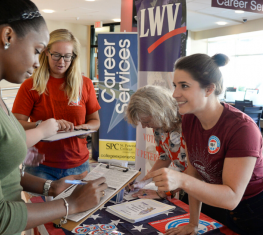
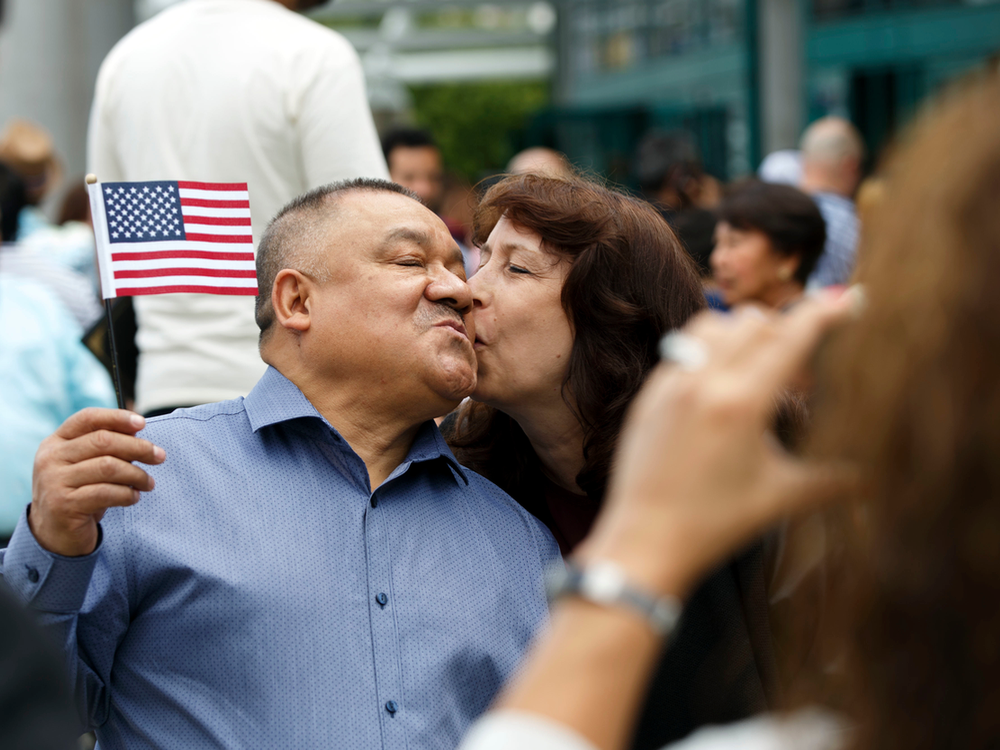
The strongest democracy is one in which the voices of all participants are heard. As such, the League is committed to helping new citizens become active in American political life. We do this by providing civic education and registering tens of thousands of new voters at naturalization ceremonies in communities nationwide.
Opposing Violence from Federal Immigration Officials
As an organization, LWV works to empower voters and defend democracy; violence from federal immigration officials, including ICE and CBP, directly threatens our democracy by undermining the rule of law and the Constitution. In 2026, LWV joined partners calling on Congress to investigate ICE and CBP's use of force following multiple shootings.
There is an effort underway to erase or diminish what it means to be Hispanic in this nation, replacing a rich and complicated history with a false narrative that treats our presence as recent, our contributions as peripheral, and our place in the United States as somehow conditional.
We are not newcomers to the American story. We are not a footnote to it. We are not a political constituency to be courted when convenient and vilified when it is not.
We are part of the foundational fabric of this country.
The League of Women Voters responds to whistleblower allegations about USCIS’s “Unlawful Voter Initiative” and calls for a full investigation.
The League of Women Voters of South Dakota and partners filed a federal lawsuit challenging South Dakota’s administration of a new voter registration documentation law that creates barriers for eligible voters
Stay Updated
Keep up with the League's work in immigration reform. Receive emails to your inbox!
Donate and support our work
in immigration reform